
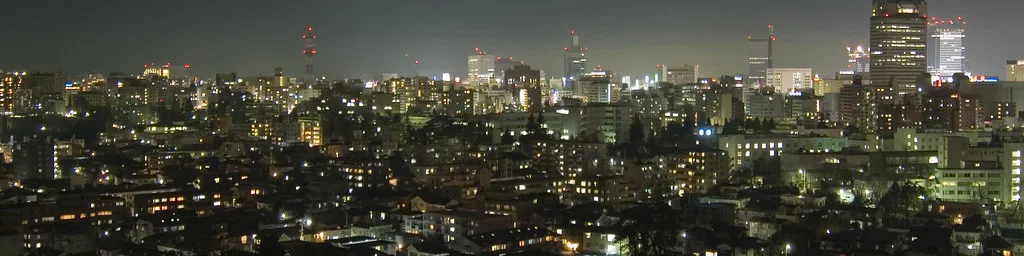
Sendai calls itself the city of trees, and the claim is visible from the station: an avenue of zelkova trees runs west from the centre, wide enough that the buildings step back from it, and the hills behind the city are close enough to be part of the view. It is the largest city in the north-east, and it feels smaller than that, partly because everything a first visit needs sits within a walk or a short bus ride of one station.
The city was laid out four centuries ago by Date Masamune, the warlord whose fingerprints are still on it. He built on the hill east of the centre, and the castle there is the oddity that gives Sendai its character: the official history says it was deliberately built without a keep, to avoid alarming the shogun, so what remains is a plateau of stone walls with a statue of the founder in front of the empty keep base and the whole city below. His mausoleum is in the cedar woods on the same hill, the shrine he ordered built is a national treasure, and the museum holds his armour and the papers of the mission he sent to Europe.
Access is what makes it practical. The shinkansen from Tokyo takes an hour and a half, more than eighty of them run on a normal day, and the city's own airport is on a direct line from the station that takes under half an hour. That turns Sendai into the obvious second stop north of Tokyo, and it also makes the mistake easy: treating it as a base for Matsushima and nothing else. The city deserves a day of its own before the bay gets one.
Choose a useful base
West of the station
The transport answer. The morning market is five minutes from the west exit, the covered arcades begin across the road, the sightseeing bus leaves from bus stop 16 beside the terminal, and the subway is underneath. If you have one night and one full day, stay here and walk.
Jozenji-dori and Kotodai Park
The pleasant answer. This is the tree-lined avenue and the streets around it: the Mediatheque, the Ichibancho arcade, the bars of Kokubuncho at night. Hotels here put the city's best walking at the door, and the subway still takes four minutes to the station.
Akiu Onsen
The slow answer. Akiu has been a hot spring for more than 1,500 years and counts itself among Japan's three imperial springs, with Bessho and Nozawa; Masamune was fond of it. Fourteen inns sit along the gorge, the bus from the station takes about forty minutes, and several lodgings run a free shuttle. It turns a Sendai stop into two nights.
Build your days
Sendai / Zuihoden / City Museum / Castle Site
The castle hill and the mausoleum: Date Masamune's city, by loop bus
A sightseeing bus up a wooded hill, a mausoleum in the cedars, a museum of the Date clan and a plateau where a castle's keep should have stood. The day that explains the city.
Sendai / Matsushima-kaigan / Matsushima Bay
Matsushima: one of Japan's three great views, by train and boat
Forty minutes on the coastal line, a boat through a bay of pine islands, and a temple of national-treasure rank. The one day here that leaves the city.
Sendai / Asaichi / Ichibancho / Jozenji-dori
The morning market and the zelkova avenue: a day of Sendai eating
Breakfast in the market at dawn, grilled tongue at lunch, the covered arcades and the tree-lined avenue in between, and a lantern alley after dark.
What to leave out
Do not put Matsushima on the end of a city day. The train is short and the temptation is real, but the bay needs a boat and a temple before it makes sense, which is half a day, and arriving at four in the afternoon means paying for a crossing you cannot enjoy. Give it its own day or leave it for the next trip.
The same arithmetic applies to Akiu. It is close on paper, but the bus takes the better part of an hour, the gorge walk and the waterfall want a morning, and the point of the place is the evening in an inn. A day trip from the city gets you a bath and a rush; a night gets you the reason people go.
The castle hill is the exception that needs care rather than time. The museum closes on some days and shows the armour only at certain periods, the mausoleum keeps its own hours, and the loop bus runs less often outside summer, so check the three before you decide the order. The site itself is free and open, and the walk between the walls is the part nobody rushes.
The Tanabata festival in early August is the one date to plan around rather than drift into: for three days the arcades carry thousands of paper decorations and the city fills, so rooms go first and trains go second. Outside those days, the same streets are simply streets, which is the better way to see them.
A meal that fits
Grilled beef tongue is the dish the city is known for, and it was born here: the first shop specialising in it opened in 1948, and there are around a hundred in the city now. The standard order is a set, with the tongue grilled over charcoal, barley rice, oxtail soup and pickles; order it at lunch, when the queue is shorter, and eat it hot.
Zunda is the other half of the identity: young edamame boiled and crushed into a sweet paste, spooned over mochi and, in its modern form, whipped into a thick green shake that the station sells to people between trains. The traditional sweet is said to have been a treat for the Bon season in the old Sendai domain. Add the morning market for a seafood breakfast and a bamboo-leaf fish cake for the train, and the eating is settled.
Read the market and avenue route →Sendai Station is on the Tohoku shinkansen: Tokyo is about an hour and a half away, with more than eighty trains a day, and the JR East passes cover the line. Sendai Airport is about 25 minutes from the station on the airport line. The Loople sightseeing bus leaves from bus stop 16 at the station's west exit, circles the castle hill in about an hour and sells a one-day pass with discounts at the museum and the mausoleum; the city also has two subway lines and day passes that cover the bay and the hot spring. Check current timetables and prices for the day you travel.
Sources & useful checks
Official information checked on 11 November 2026. Follow the operator or venue for changes and your travel dates.